use keyboard arrows for additional information about this breed
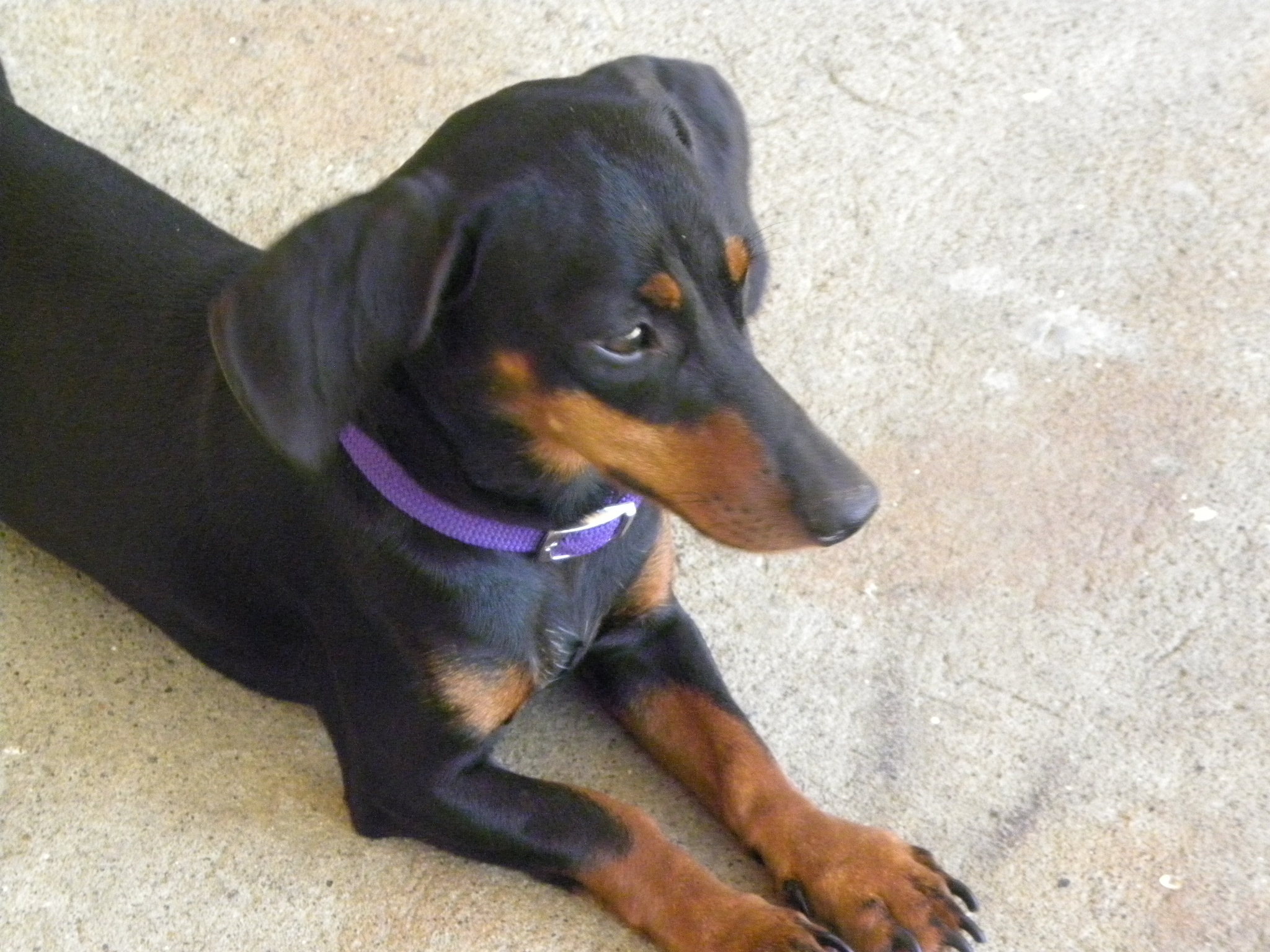
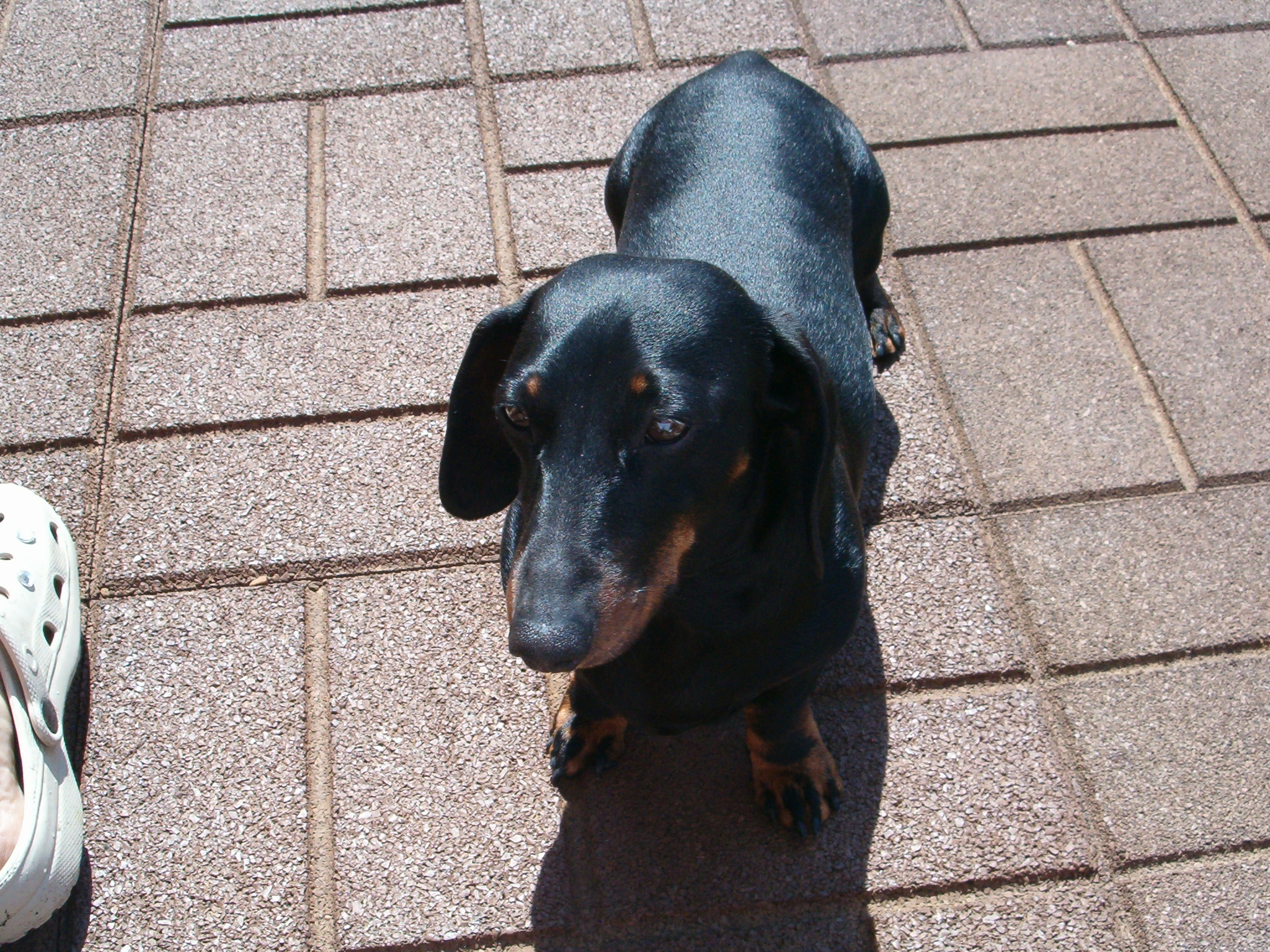
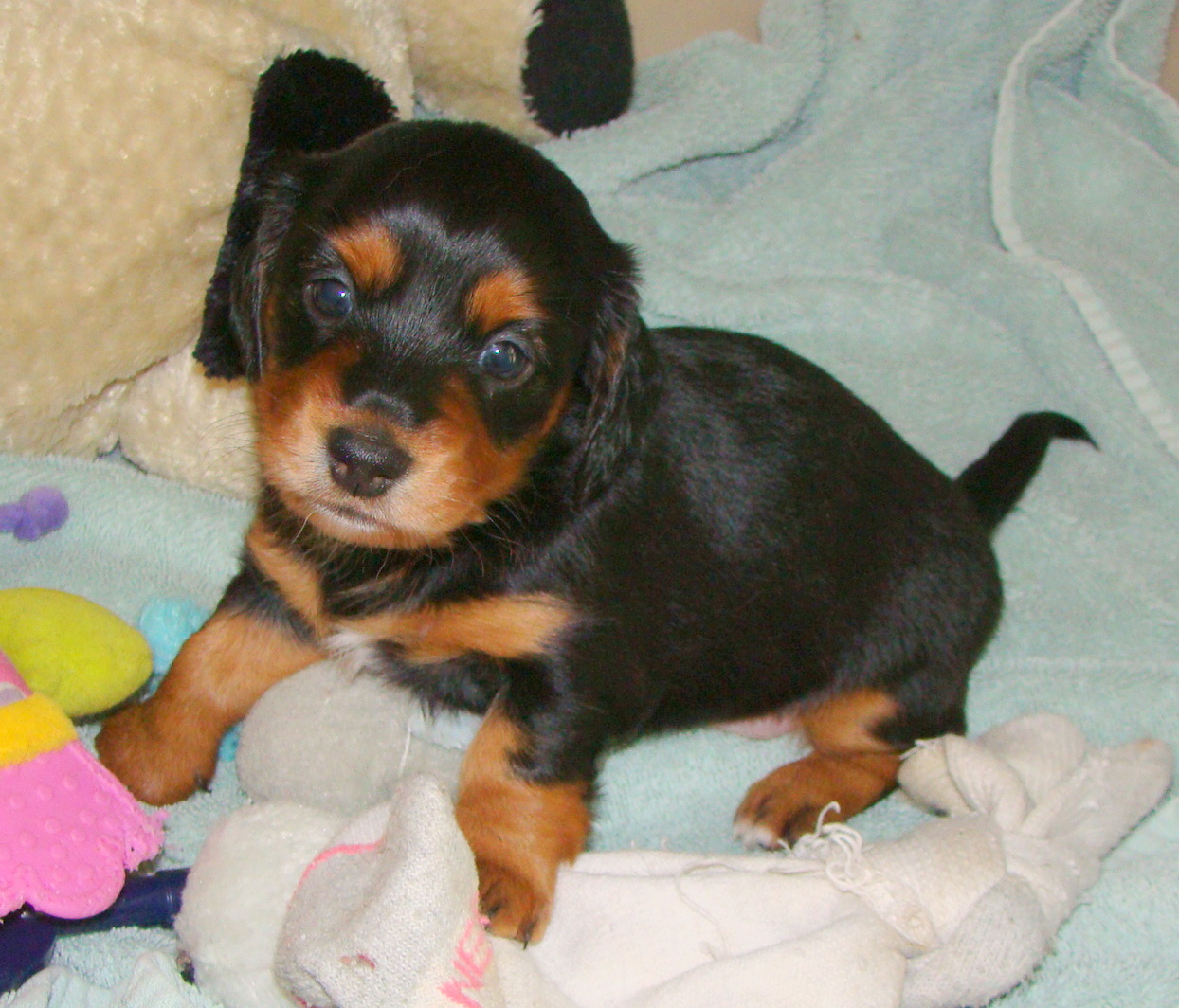
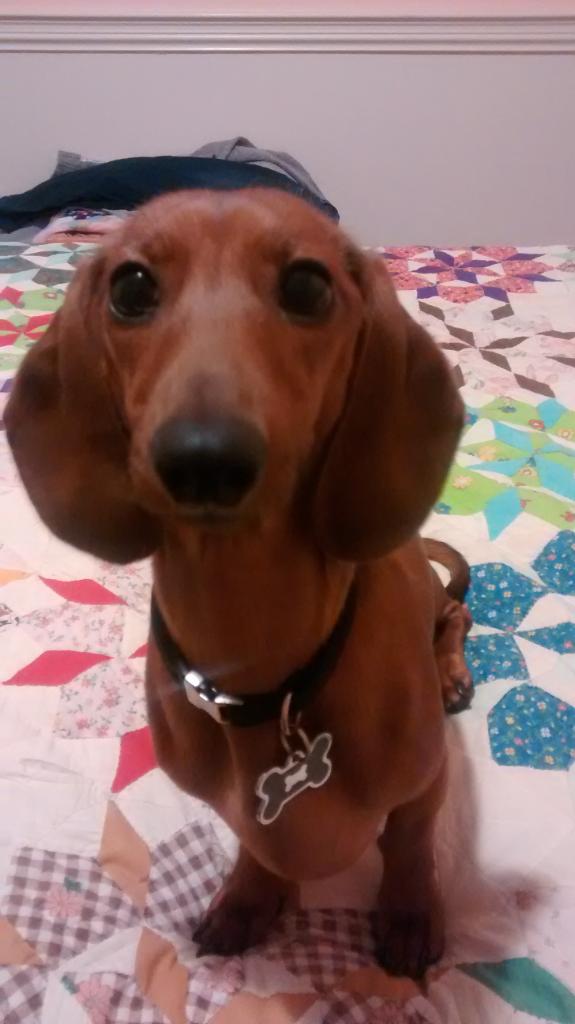
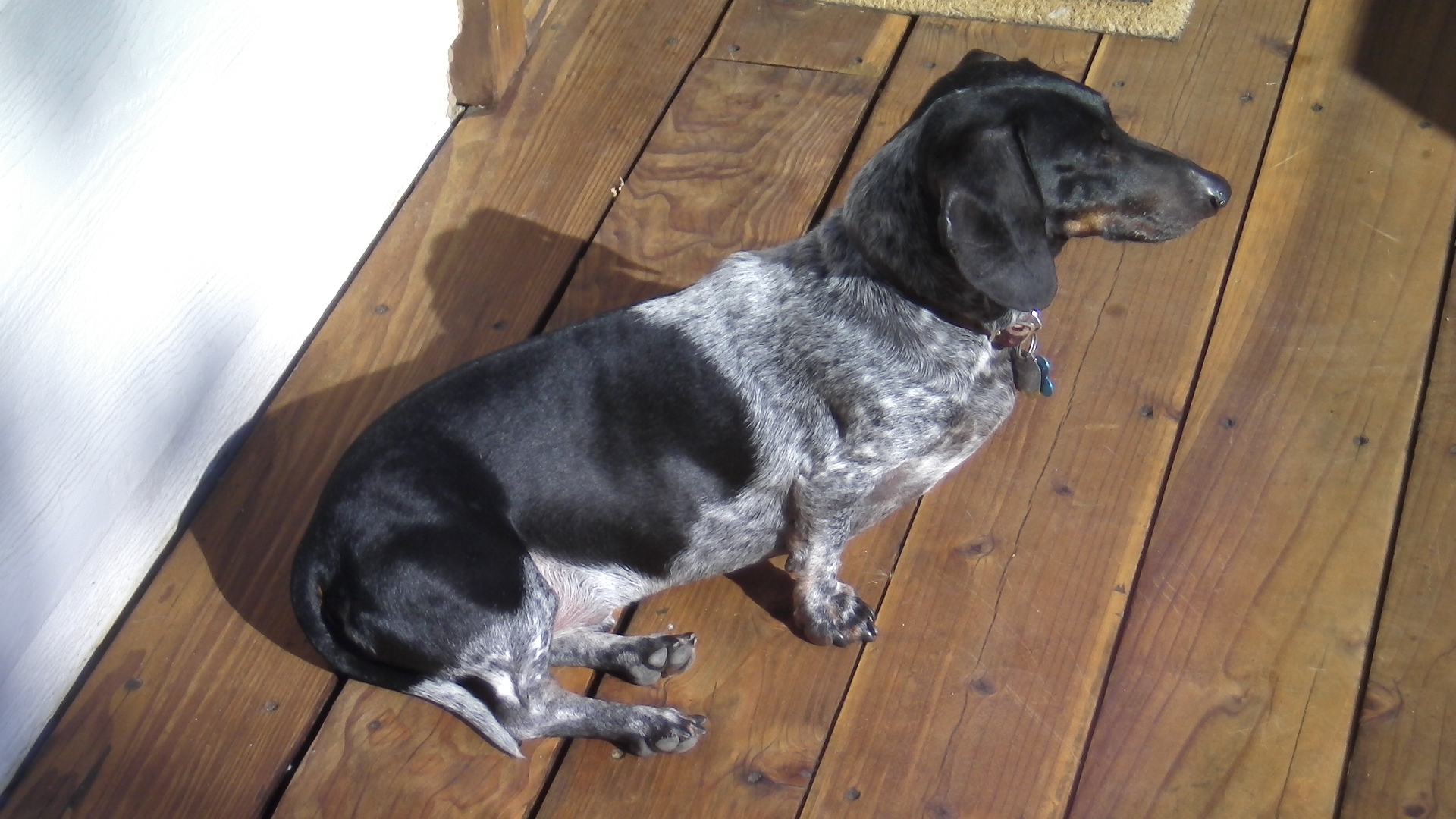
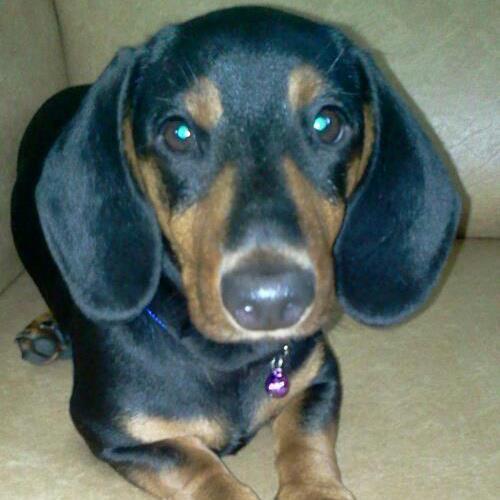
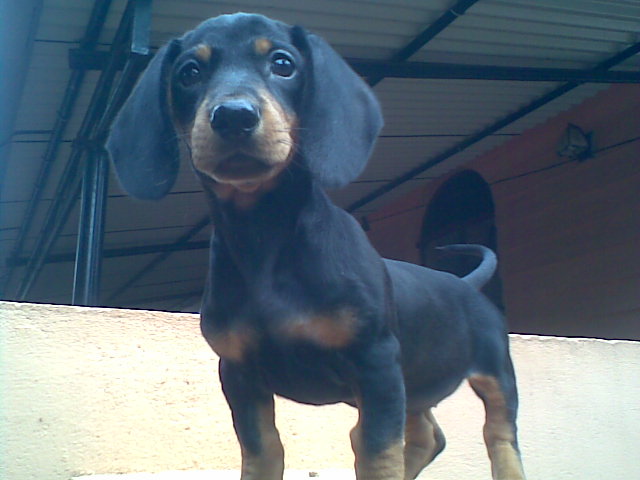
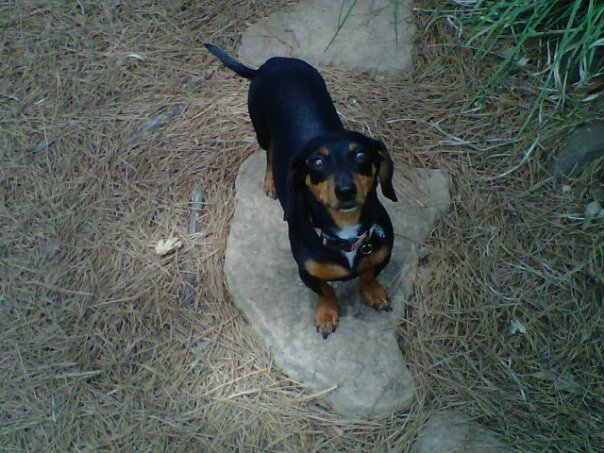
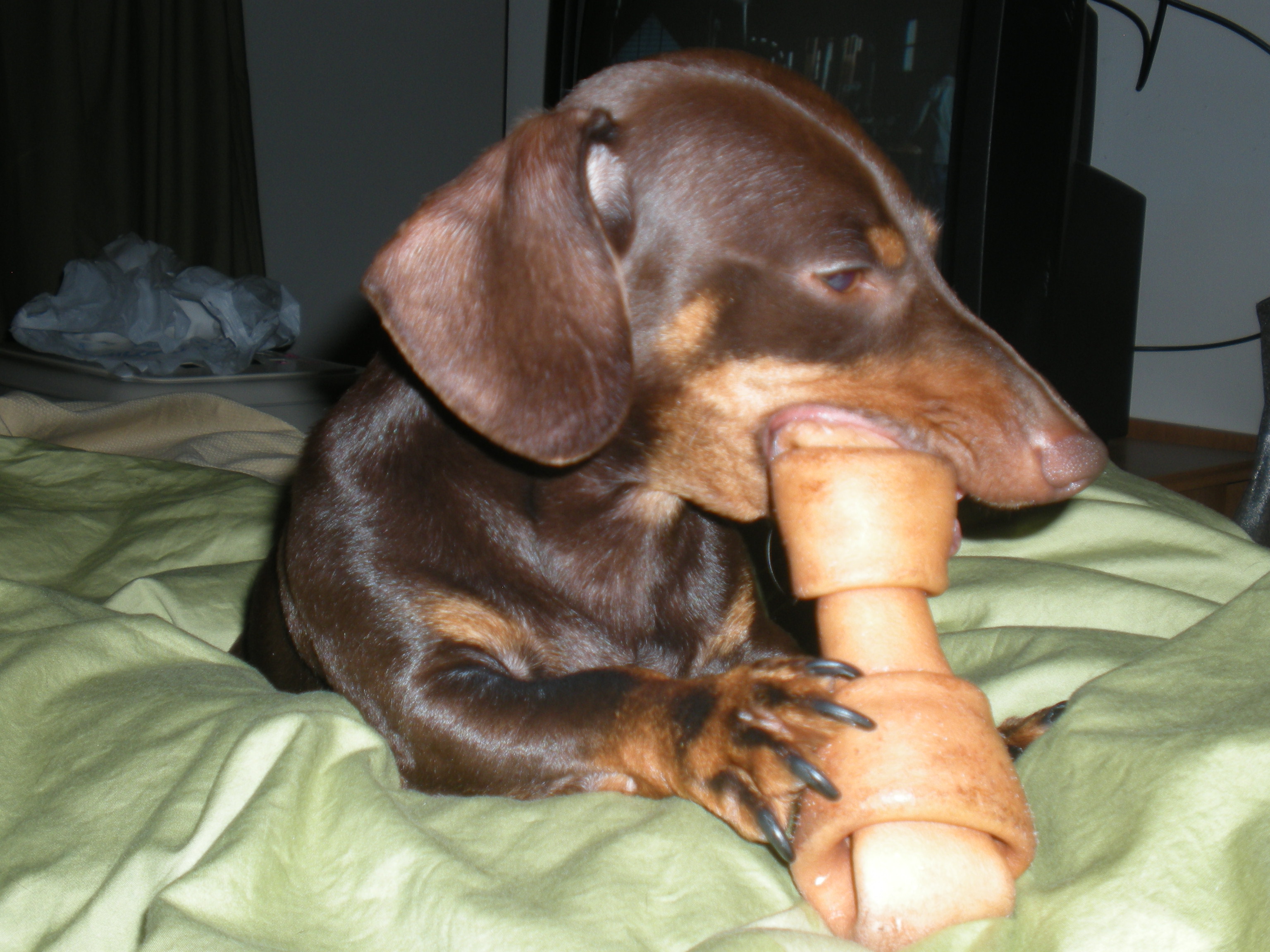
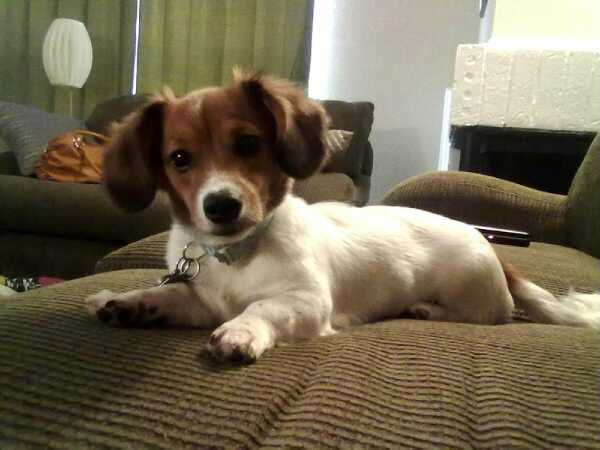
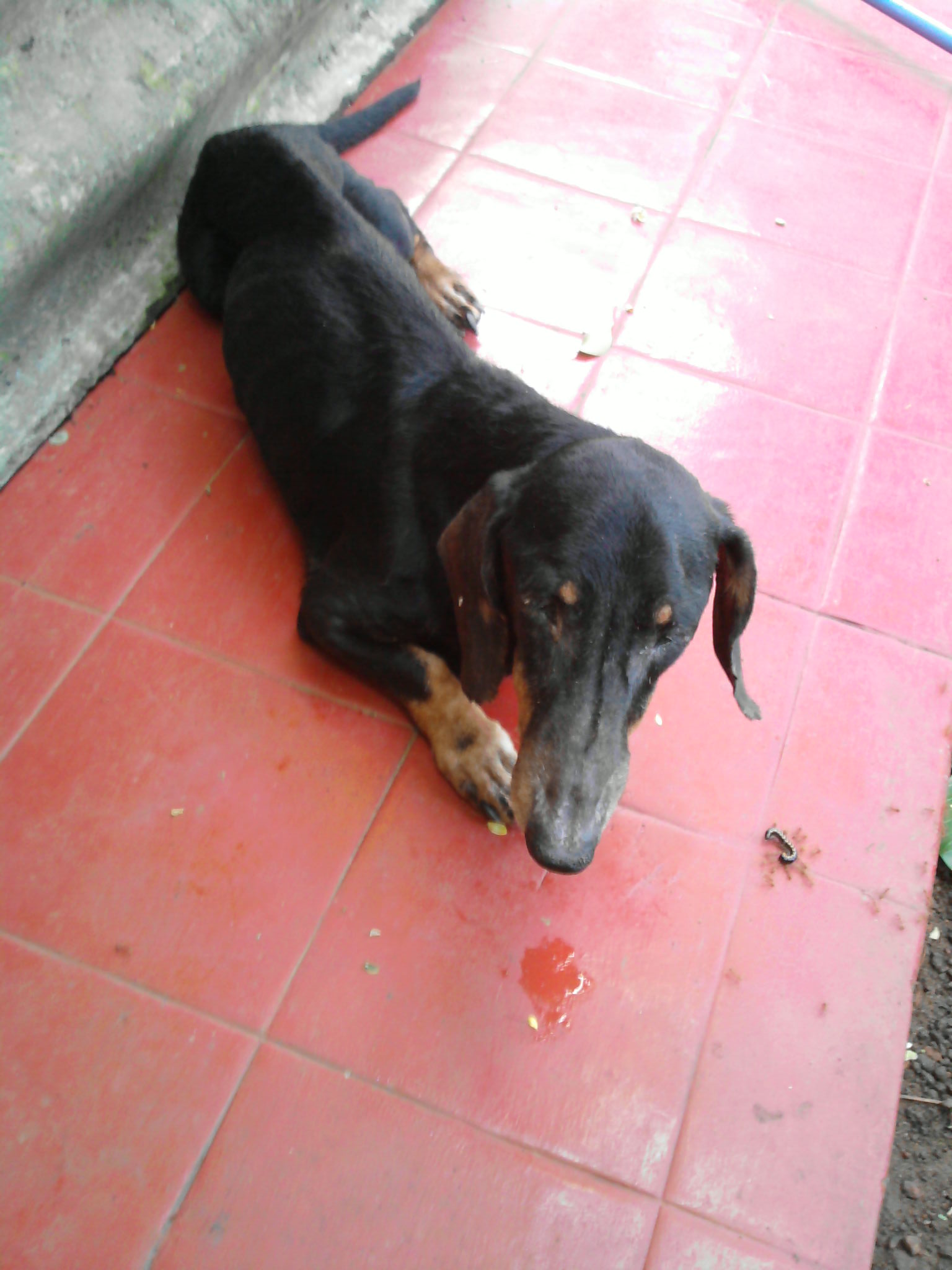
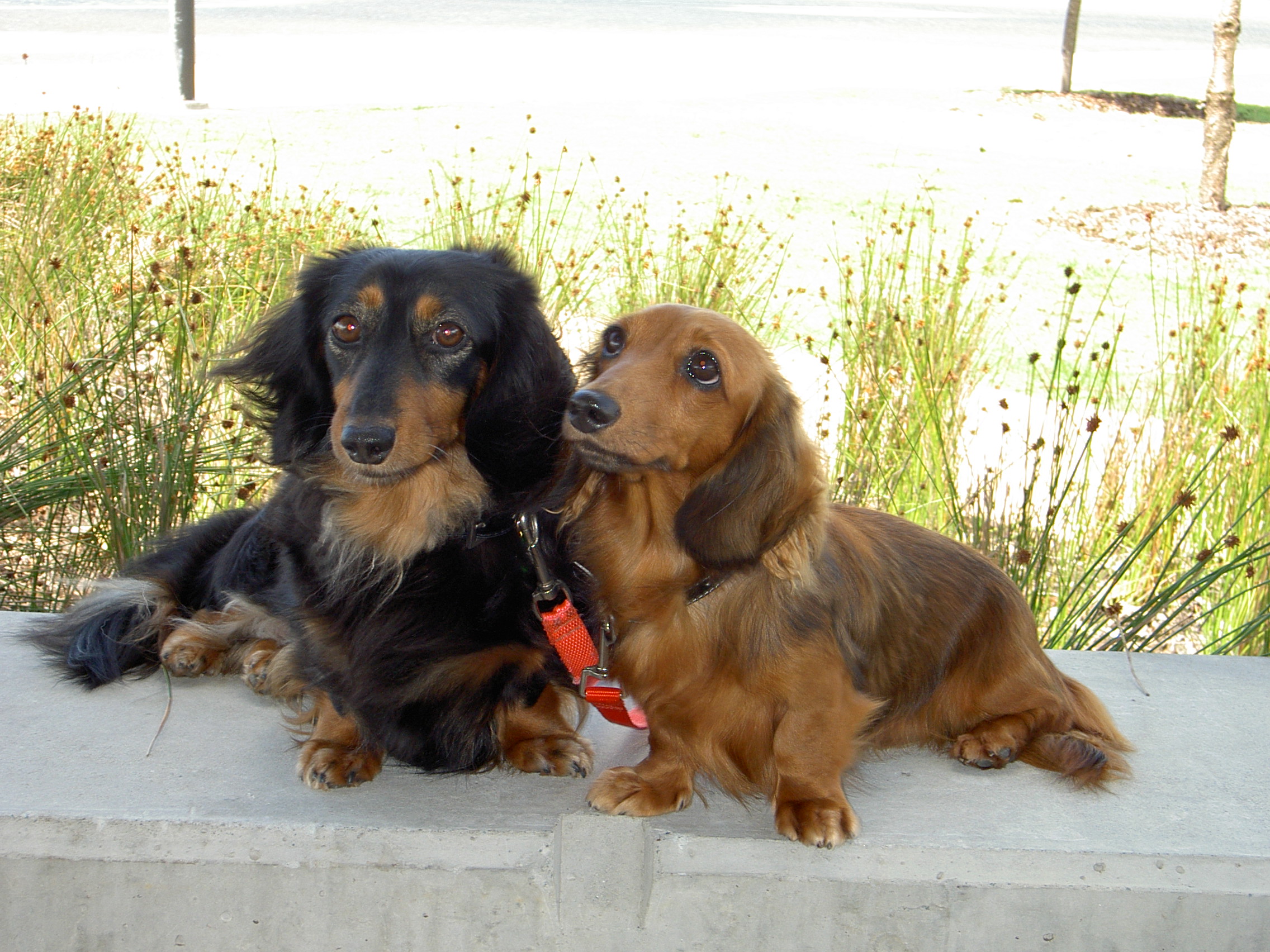
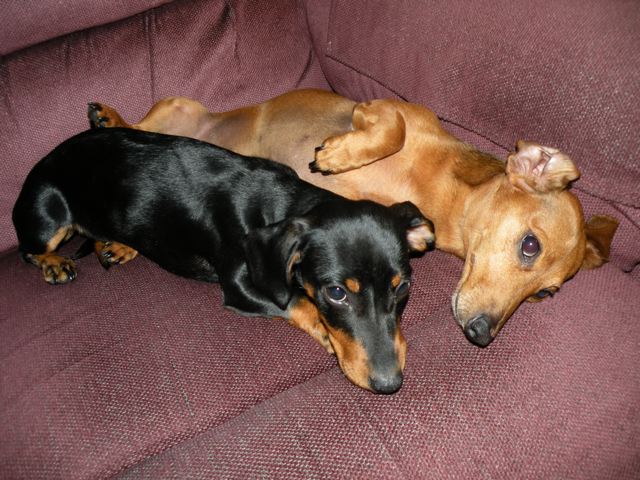
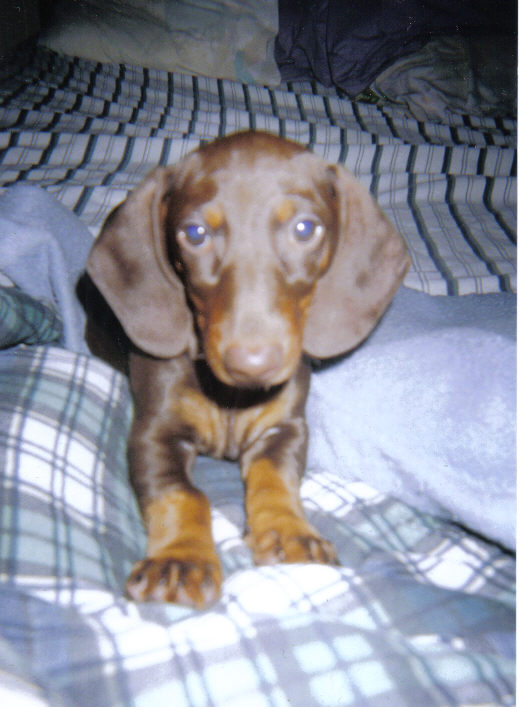
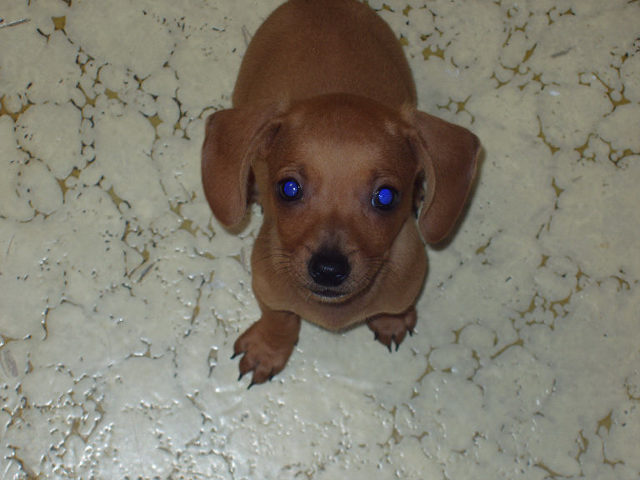
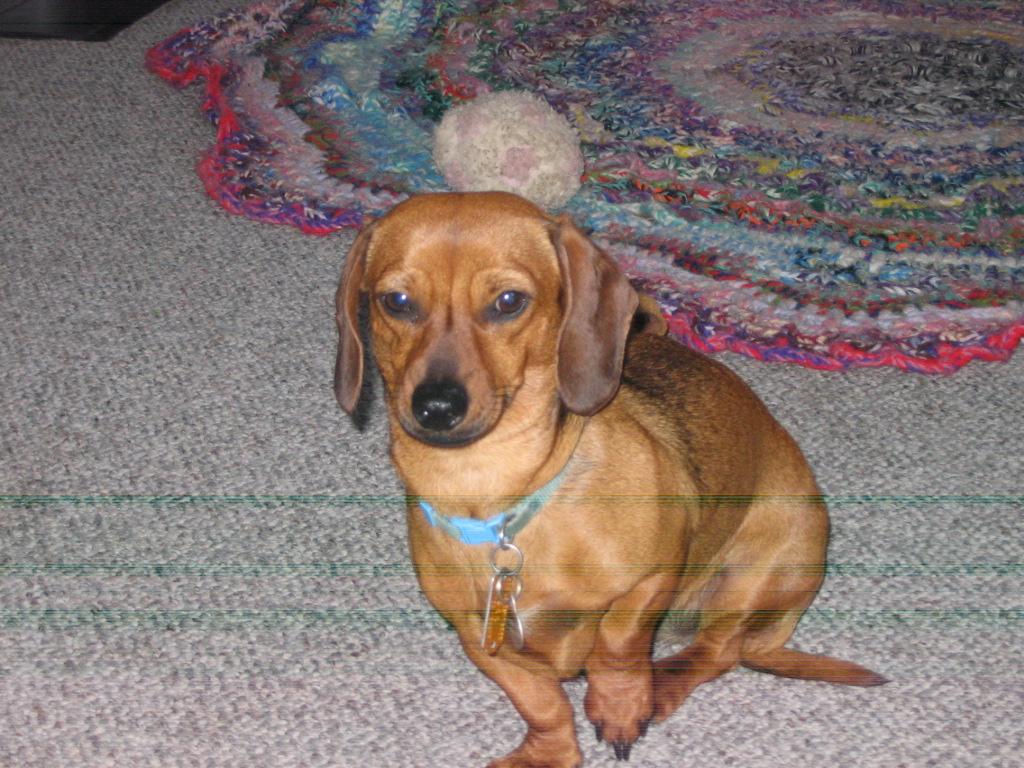
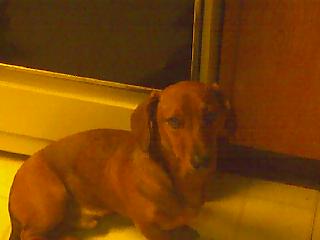
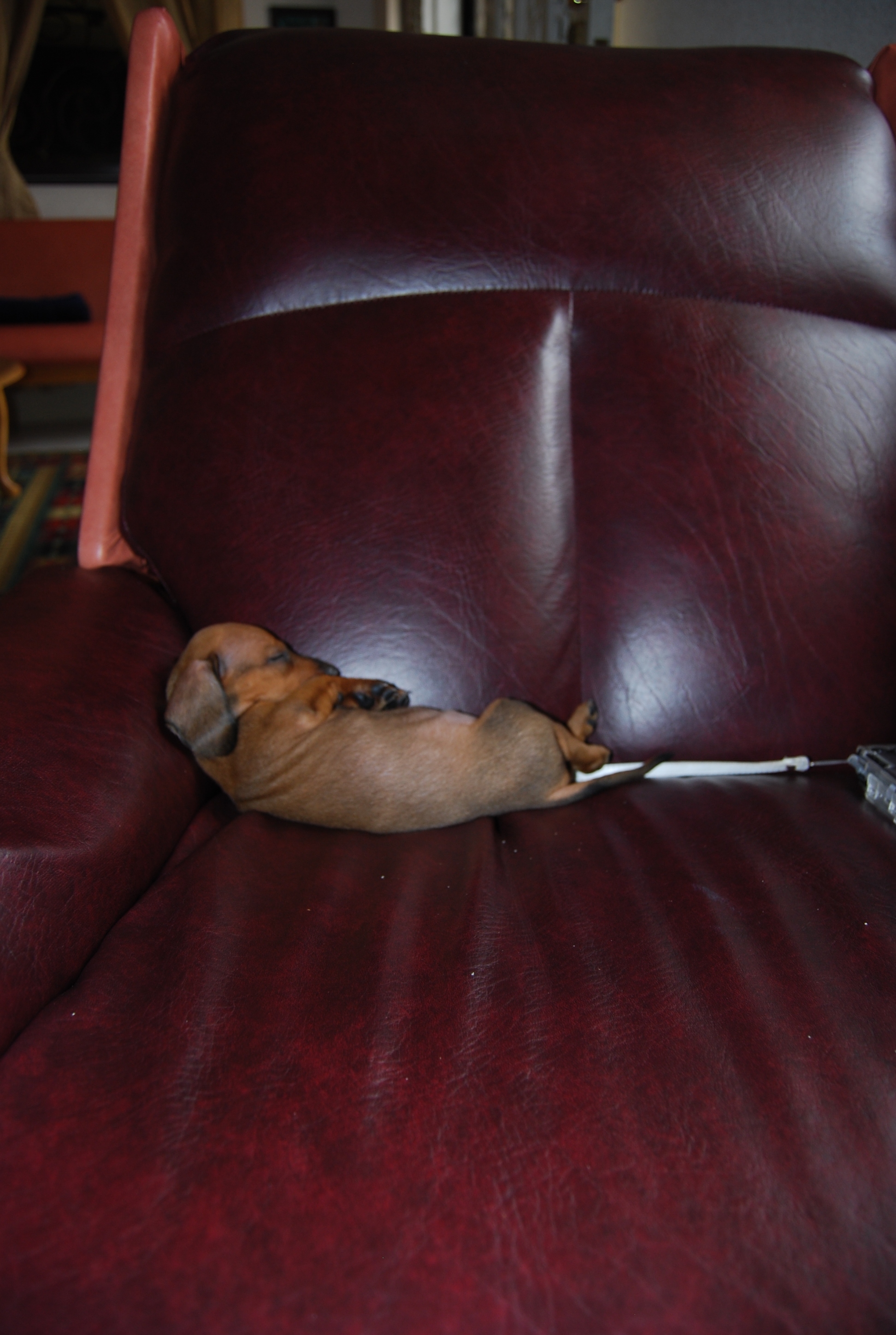
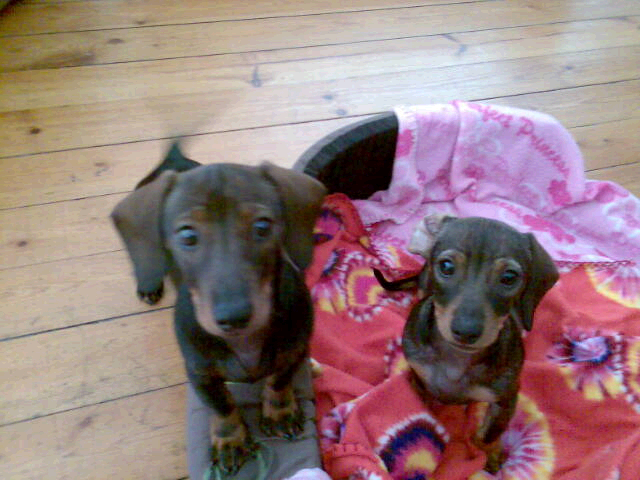
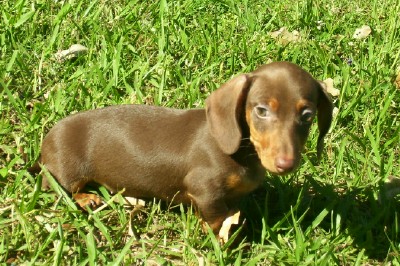
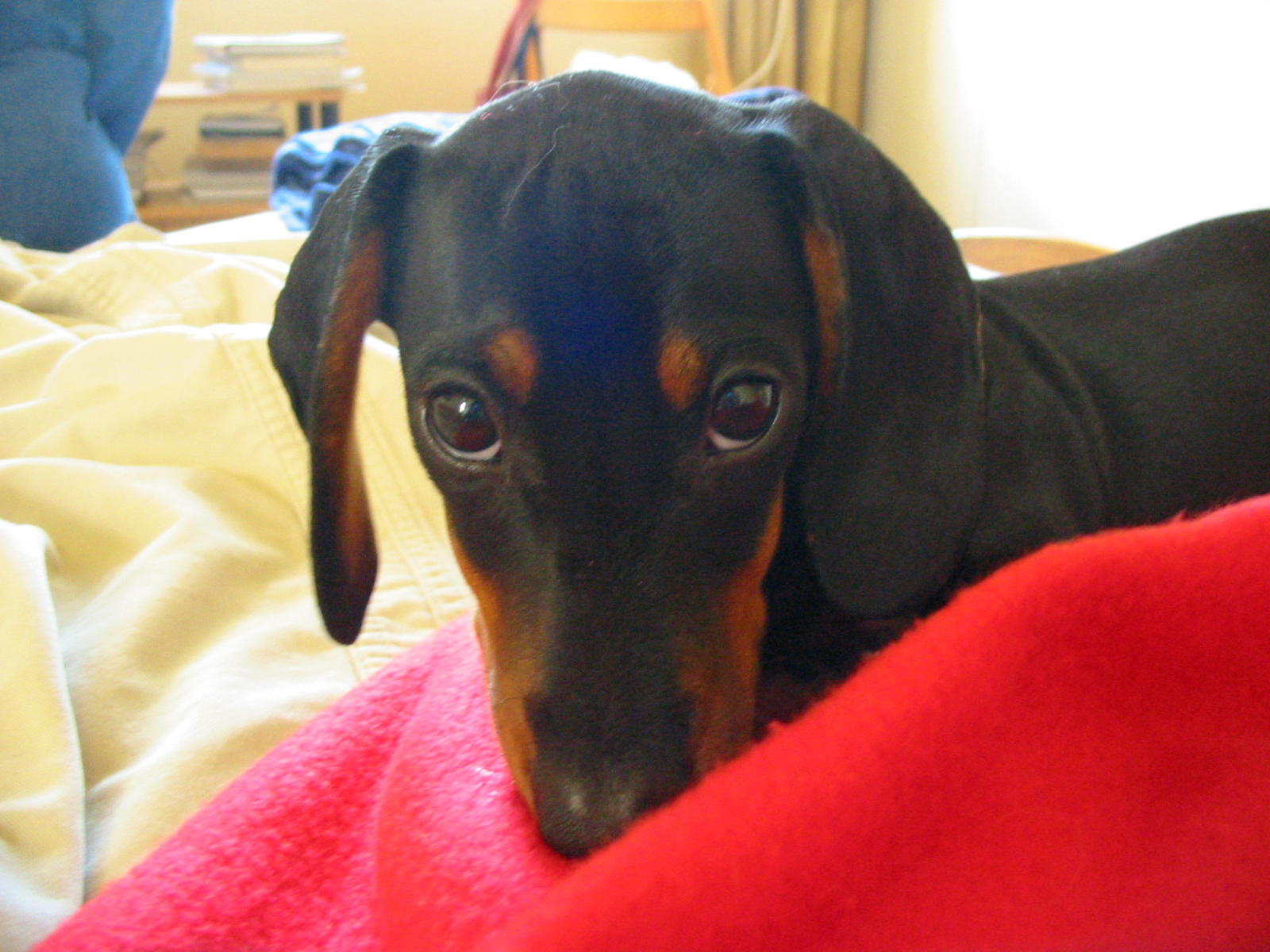
(Standard Dachshund, Miniature Dachshund, Toy Dachshund, Doxie) The Dachshund is a small hound breed with a long, well-muscled body and stout, short limbs. They possess an intelligent expression and they carry themselves quite proudly. Their body features a protruding sternum and a retracted abdomen. Their head is elongated, their skull is slightly convex, and their long muzzle features a robust set of jaws. Their teeth close in a scissors bite and their oval-shaped eyes are dark in color. They have arched prominent eyebrows and long ears that are mobile and hang toward the cheeks. The breed’s tail is carried in the line of the back. There are three varieties of Dachshund: short-haired, long-haired, and wire-haired. Within each of these varieties, there are three different sizes. The coat of the Dachshund is glossy, sleek, and consistent. It can be solid, bi-color, piebald, speckle-streaked, or harlequin. Solid-colored Dachshunds are tan or yellow, while bi-color Dachshunds are deep black, brown, or gray with chestnut markings.
User added info
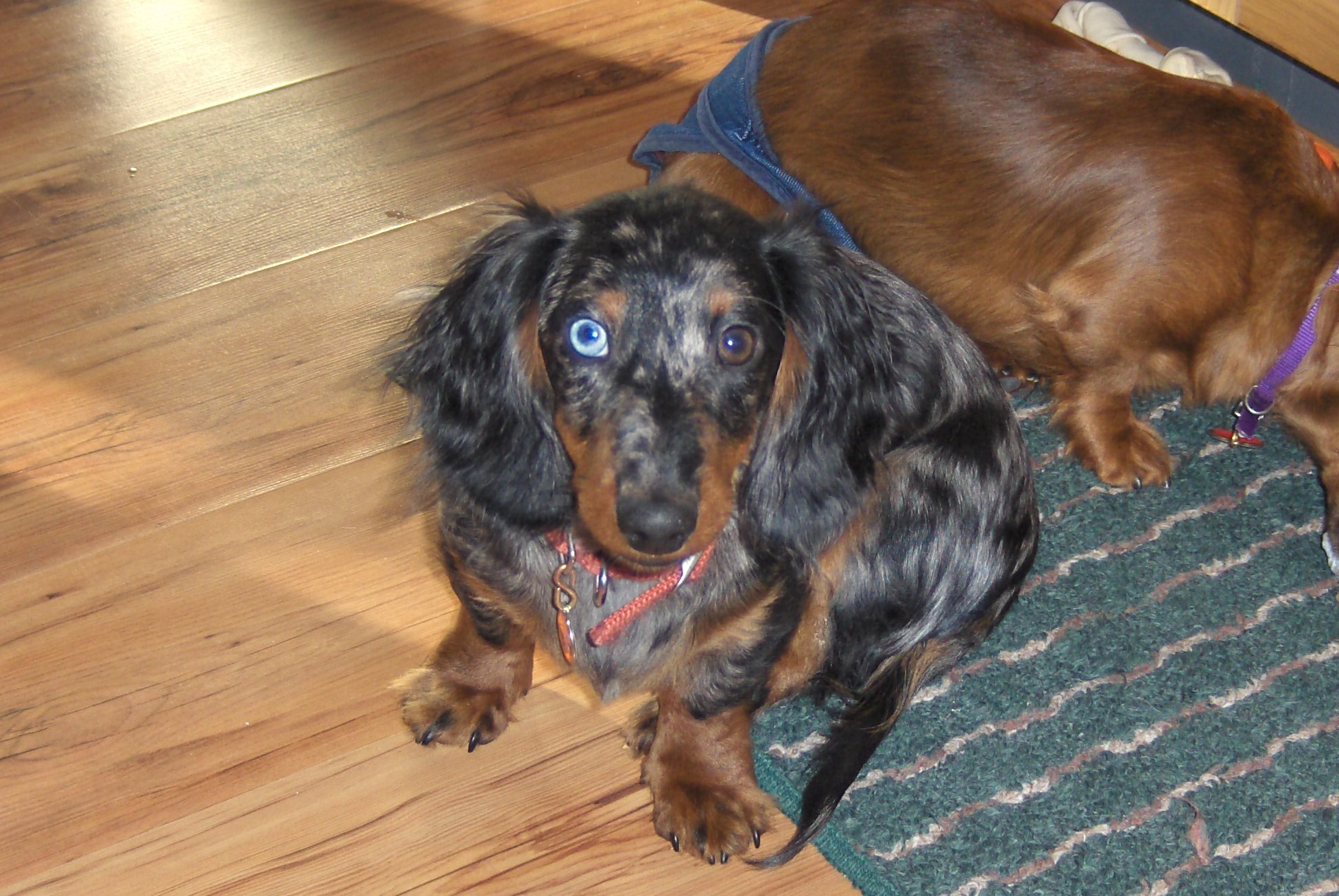
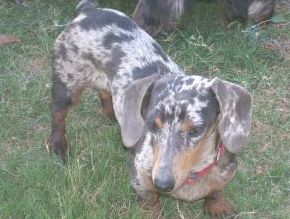
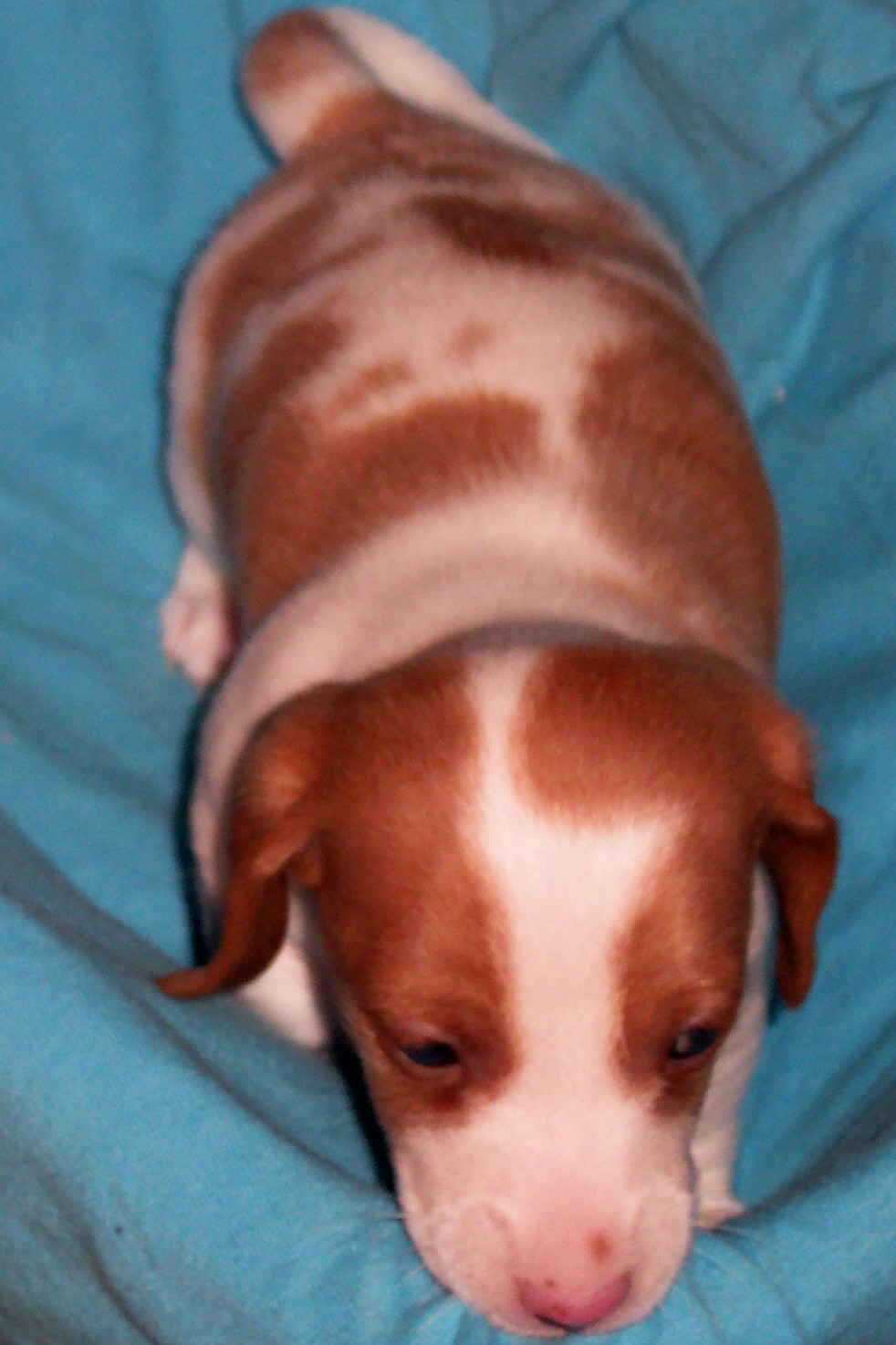
They can also have dapple (or spotted) markings that appear in a variety of colors such as blue, black and silver, chocolate, and tan. There can also be double dapples which are a mixture of three colors.
Some are a rare color of solid black known as sable.
Sable is a black overlay usually found on a red or cream coat.
The Dachshund is affectionate and full of energy. Their proud, bold demeanor sometimes borders on abrasive, but their clownish streak usually makes up for their willfulness. They are courageous, mischievous, and have a tendency to try and train their owner(s). The breed is loyal and devoted to their family, and gets along quite well with older, more considerate children. They are a good breed to travel with, and they generally live happily with other pets. They have been known, however, to get jealous and irritable towards other animals. All varieties of the Dachshund are comparatively difficult to train. They enjoy barking and they sometimes refuse to be handled. They have moderate protective instincts. Many owners and breeders of the Dachshund say that the wire-haired variety is more outgoing and goofy and that the long-haired variety is calmer.
Dachshunds need to be socialized with other dogs from birth. Unsocialized Dachshunds may show signs of aggression when older.
The Dachshund is susceptible to spinal disc problems that may lead to paralysis. Other health concerns include the onset of heart disease, urinary tract problems, and diabetes. The Dachshund should not be overfed because of its propensity to put on weight and become lazy. Overfeeding the Dachshund will put unnecessary strain on the dog’s back, and it will also contribute to the onset of a number of serious health risks. This breed typically lives for 12 to 15 years.
It is not uncommon for double dapple Dachshunds to have hearing and vision problems, deformities, an increased occurrence of urinary problems. This is caused by the mutation of the white gene.
It is recommended to carry Dachshunds up and down stairs in order to avoid future back problems. If allowed on the furniture, they should not be allowed to jump off themselves.
The Dachshund originated in Germany hundreds of years ago. The breed’s initial purpose was to hunt and follow badgers, and the word “Dachs” is actually the German word for “badger”. After many years of performing this task, the Dachshund gradually evolved with shorter legs that helped the breed go down into burrows and dig with more efficiency. Smaller Dachshunds were bred for the purpose of hunting stoat and hare.
They are very protective of their owners and are very smart. Many will retain a playful streak even as they grow out of puppy hood and they will remain affectionate all of their lives. Dachshunds were originally bred to hunt badgers. Standard Dachshunds are to small to fit in rabbit holes so they bred them into miniature also. They originally had short smooth hair that couldn't protect there skin when hunting. So they were bred into a long haired variation. The longer hair did protect them from cold but could not protect them from thorn bushes. So they were bred into wired haired Dachshunds. The wiry hair could protect them from bushes and animals. There are two kinds of Dachshunds and three different kinds of hair types. The Miniature and Standard Dachshund come in Wired Hair, Long Hair, and Short hair. They are commonly used throughout Scandinavia to hunt all species of deer. They are trained to locate deer, herd them to the hunter and to bark at the deer which alerts the hunter. They are ideal for this task because they are small enough that the deer are not frightened off but only keep a short distance away from the barking dog and slowly move to where the hunter is ready and waiting.
The long-haired Dachshund requires daily combing and brushing, and the wire-haired Dachshund needs professional grooming at least twice per year. The smooth-haired Dachshund’s coat should be wiped down with a clean, damp cloth. All Dachshund varieties are average shedders.
The Dachshund is content to live in a small household or apartment. They are an active breed, both outdoors and indoors, and they enjoy going for walks and playing in the park. They are perfectly happy without a yard, but they should be given at least a bit of exercise per day. Rigorous activities (like jumping) should be discouraged because of this breed’s proneness to spinal damage.
Dachshunds are very obedient dogs and they perform well in showmanship trials, rallies, and other competitions.
If you're having problems training your dog or getting control, you should read our review of DogProblems.com. Adam will do whatever it takes to help you whip your dog into shape. I've used them to help with my Great Dane as well as help friends train their dogs. It's the first place I go to help answer users Questions. Many training issues are too extensive to answer in this forum, which is why I refer a lot of the load to his site.
Update: I've been using and recommending DogProblems for three years now. I, as well as my users, value the techniques we've learned. I get weekly emails from users who have become better owners from the information they received.
I have 3 mini's and they tend to shiver when they are nervous. I also had a runny eye and nose problem with one of my girls and it was due to dry air from my wood burning stove. Now I keep a humidifier and it has helped.
sorry but your dog ,i think has soeme defect...dachshund does have a straight back...i had a dachshund whose back was straght and mah frnd's dachshund's back was also straight...plz refer to the doctor...Hope this helps
-sreemoyee
Dachshunds are cute littlle dogs that look like hotdogs
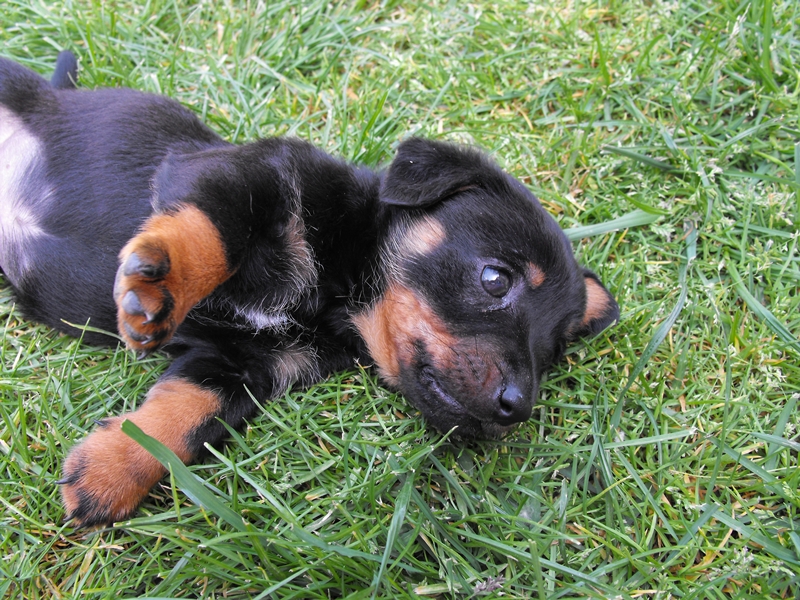
Age :
7 weeks
Name:
Cheeto
Color:
Brown spots on face then the rest black
Description:
Cute, playful,kind of sleepy at times, and a good party pet
Age :
4 yrs.
Name:
Carley
Color:
Dapple (tan) & chocolate
Description:
Carley is great dog. she is very cuddly and loving!
Age :
Six years
Name:
Davy Jones
Color:
Black & Tan with White Ticking
Description:
Adopted from the local shelter, Davy is the most grateful and loving companion. He is a fantastic watchdog - too good at time! He adores people once he gets to know them, and can be a bit jealous and protective of the ones he does know. He is amazingly intelligent and borders on mind reading at times! He has no idea he is a small dog and tends to charge big dogs and muzzle punch them. He came from a background of abuse but is making great improvements in his social skills. Warning - Dachshunds are addicting - get one, and you WILL want more!
Age :
5 years old
Name:
Rusty
Color:
reddish
Description:
Rusty is a long haired Dachshund ,he resembles a tiny irish setter in coloring, he is learning how to cope with a brand new 8 week old sister Precious who is part silky terrier and part chihuahua,
Age :
4 years
Name:
Fred
Color:
blonde
Description:
Fred is a Crestoxie, (the breed is not a choice in the breed box)
We adopted him back in june of 2012 from our local animal shelter
Age :
7months old
Name:
Kaizer
Color:
black brown tan
Description:
Kaizer are very intelligent and playful.
Age :
7months old
Name:
Kaizer
Color:
black brown tan
Description:
Kaizer are very intelligent and playful.
Age :
1
Name:
Toki
Color:
Black and Tan
Description:
Toki is a one year old, black and tan Doxie-Pin.
Age :
6
Name:
Mollie
Color:
red
Description:
My little baby girl!!!
Age :
2
Name:
chakki
Color:
black
Description:
lovely smart...
Age :
12 weeks
Name:
Tracker
Color:
Red
Description:
Meet a tracker a akc red boy who is showing for piebald in his chest and toes. Are you looking for a puppy that is out the crying stage one Started on crate and potty training then look no further. Hh has the sweetest, most loving personality and is sure to share a kiss with you. Vet checked, dewormed, Utd vaccines, health guarantee and dew claws removed.
Call today to come play and meet this very special boy
Age :
9 weeks
Name:
Minnie & Winnie
Color:
Isabella & Tan
Description:
Age :
9 weeks
Name:
Mizzy
Color:
Red Brindle
Description:
Age :
6 weeks
Name:
Max
Color:
Isabella & Tan
Description:
Age :
6 mths old
Name:
Brolly
Color:
golden
Description:
Brolly is a Long-Haired Dachshund
Age :
3 1/2 years
Name:
Sammy
Color:
black/brown
Description:
sweet & adorable
Age :
11 months
Name:
Beethoven
Color:
Black & Tan
Description:
Long haired male
Age :
2 yrs
Name:
Max
Color:
black w/red
Description:
Max is a two yr old rescue dog. He's a very sweet, but shy little boy.
Age :
4
Name:
Macy
Color:
black and tan
Description:
she is licking her chops
Age :
1 year
Name:
sam
Color:
black/tan
Description:
this is Sam, he is so loving and funny too. he keeps us laughing
Age :
3
Name:
Willy
Color:
Red
Description:
Very loyal and loving. Loves attention and gets along great with other dogs and children. Suffers from extreme cowardice and thus is unable to control his bladder at times of excitement. Runs around the house in circles like a short legged bullet when he gets energy spurts. Best dog EVER!
Age :
3
Name:
Cooter
Color:
Chocolate
Description:
Cooter is a crazy pup! He is 10lbs of dynamite! He loves his family and will do anything he can to make us happy. He is friendly to people but doesn't care too much for anyone petting him-he thinks he is a 100 lb attack dog. Little body-BIG attitude!
Age :
2 years
Name:
Rudy
Color:
Light brown black tipped ears
Description:
he was so mad at me
Age :
2 years
Name:
Rudy
Color:
Light brown black tipped ears
Description:
Rudy has a natural mohawk...so cute. He also has the softest hair on his front paws...when i walk him i get so many people who tell me he looks like a little teddy bear!!!
Age :
3
Name:
Mavrick & Capt Jack
Color:
Red/silver dapple and Black
Description:
They are mini's love to Hunt and are very loving dogs
Age :
7 mouths
Name:
Charles
Color:
brown
Description:
cute
Age :
3yrs
Name:
recee
Color:
brown
Description:
pretty brown chocolate ..
Age :
4 1/2
Name:
baby
Color:
black & tan
Description:
gorgeous little weenie in the dryer
she loves the heat off the clothes!
Age :
8-ish.
Name:
Windell
Color:
black and tan
Description:
He's a wonderfully sweet dog. His exact age is unknown. He loves being a lap dog and letting his owners know what's what.
Age :
2 years
Name:
Norman
Color:
Dapple with silver
Description:
Norman & his son Little Richard
Age :
4 months
Name:
Little Richard
Color:
Black, white, silver
Description:
So sweet and loves to cuddle. He has one blue eye & one brown eye.
Age :
4 years
Name:
Pippa
Color:
black
Description:
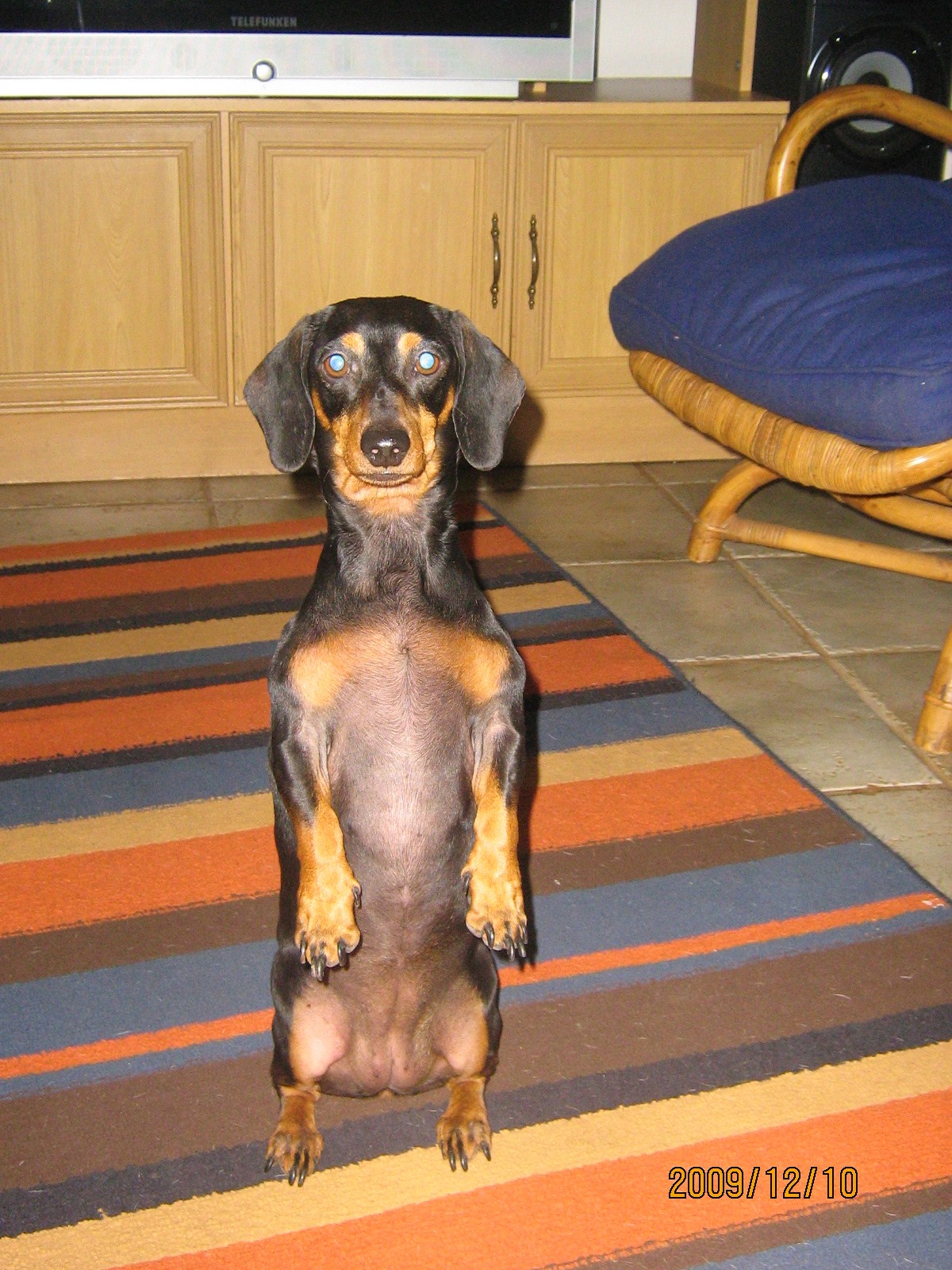
My dog-child, started doing this out of her own one day to get my attention.
Age :
3
Name:
Ensign Duffy
Color:
Strawberry Blonde
Description:
Thick and shiny reddish/blonde coat with lighter blonde "feathers" and tail and paws.
Age :
5 months
Name:
joie
Color:
black mix with white
Description:
shes so loving and faithfull i realy love my dog
Age :
i year old
Name:
Pia
Color:
black
Description:
cute Pia.
Age :
3
Name:
Baby
Color:
Light brown
Description:
Short haired, aggressive, greedy n hunts
Age :
8 months
Name:
Buster.
Color:
Black and tan.
Description:
My babyyyy.
Age :
8 weeks
Name:
un-named
Color:
Red Sable
Description:
AKC Red Sable Smooth Hair Female for Pet/Companion
Age :
8 months
Name:
Chloe
Color:
white and brown piebald
Description:
this is my sweet chloe monster! i love her to death, she has so much personality and loves people!
Age :
2
Name:
jikku and minnu
Color:
black and brown
Description:
I got these dogs 2 years back, They were 15 day old puppies at that time.
Now, owing to transfer and some personal reasons, i had to give them to a friend of ours.. These dogs are no longer with us...
Age :
5 weeks
Name:
Baby Girl
Color:
Black and tan LH
Description:
Black and tan LH 1 male and 1 female available. These puppies are 5 weeks old they are available to be your newest family member. Very sweet and loveable. For more information about these 2 cuties please feel free to contact me.
Age :
6 mo.
Name:
Patchwork Meadow
Color:
Isabella
Description:
This is our water hog, Patches.
Age :
4 months
Name:
Lushie
Color:
red/tan
Description:
Hi I'm Lushie from Manila Philippines.
Age :
9 yr
Name:
spike
Color:
daper
Description:
the baby
Age :
3years
Name:
lucky
Color:
brown
Description:
she is very active,loves her family a lot,always ready for walking(any time),n much more silly things in her......
Age :
6
Name:
Derry
Color:
Black
Description:
He is my only cute puppy....
Age :
2
Name:
steve
Color:
balck and white
Description:
he is very smart
Age :
2mo.
Name:
Lilly
Color:
red
Description:
She is a spunky little red head who loves to go to baseball games and play with her BFF Cooper the cat. She does not like to be picked up when sleeping, but usually a very sweet puppy to all.
Age :
6
Name:
Precious
Color:
red dapple
Description:
Little Miss photogentic
8lbs Red with lighter red dapple
Age :
4 years
Name:
Logan
Color:
white with brown spots
Description:
white and brown 4 year-old dachshund that lives in MI not for sale but is super cute
Age :
6 years
Name:
Bonnie
Color:
Black and Tan
Description:
Bonnie is an Australian Champion now enjoying retirement with another little girl Astra aged 3 years.
Age :
3years
Name:
astra
Color:
red
Description:
Astra is a lovely 3 year old girl who has just had a litter of five. She is such a tiny girl weighing only 4.8 kilos
Age :
5 years
Name:
Oscar
Color:
black/brown
Description:
Not another photo op!
Age :
9 years
Name:
Emmie
Color:
brown
Description:
Laundry day
Age :
9 years and 5 years
Name:
Emmie and Oscar
Color:
brown and black/brown
Description:
Living the good life
Age :
5 and 1
Name:
Zach and Lily
Color:
Brown and Black/Brown
Description:
Zach and Lily love each other!
Age :
1 n half months
Name:
suggest one
Color:
black
Description:
i jus bought her today..so plz tell me if its a pure breed or not??
and also wat care does she requires??
Age :
3 yrs old
Name:
Carla
Color:
black
Description:
affectionate, loving and full of nergy ^-^
Age :
1 and 4 years old
Name:
Oscar and Otis
Color:
Dapple and Black
Description:
These are my 2 dachshunds Oscar and Otis!! I love them to death and I have no idea what I would do without them!!!
Age :
2
Name:
Sundari
Color:
English Cream
Description:
First time at the off leash dog park
Age :
2
Name:
Sundari
Color:
English Cream
Description:
Loves to snuggle and loves to have her belly rubbed
Age :
2-3 years old
Name:
Big
Color:
brown with some black
Description:
Long ears, long body, short fat paws
Age :
2 months
Name:
Nduz
Color:
brown
Description:
-
Age :
10 day's
Name:
none
Color:
chocolate & tan
Description:
Age :
4
Name:
Pali
Color:
Spotted brown
Description:
Playfull
Age :
7 months
Name:
Chip
Color:
chocolate & tan
Description:
My sweet and loving doggie ready for a party.
Age :
1yr 11mths
Name:
Brownie
Color:
Choc and Tan
Description:
Brownie thinks he's a cat. :)
Age :
1yr 11mths
Name:
Brownie
Color:
Choc and Tan
Description:
Brownie at 2 months old.
Age :
1yr 11mths
Name:
Brownie
Color:
Choc and Tan
Description:
Brownie is a bit different then my other dog Scooter. He is a little more aggressive toward other animals and small children. He loves to be loved on and loves to have his belly rubbed. He is a great dog.
Age :
2
Name:
Scooter
Color:
bi-color
Description:
This was Scooter at 2 months old.
Age :
2
Name:
bertie
Color:
brown
Description:
cute
Age :
2
Name:
Zee
Color:
black and tan
Description:
He is the light of my life. He loves to be with me all the time...even in the pool, although I am sure he would sink without my hand under his belly. This is a puppy pic.
Age :
2 years
Name:
Kyzer
Color:
black and tan
Description:
He is very playful and affectionate.He rules the house or so he thinks he does.
Age :
2 years
Name:
Kyzer
Color:
black and tan
Description:
He is very active and playful.He rules the house or at least he thinks he does.
Age :
2
Name:
Peanut
Color:
tan
Description:
This is a picture of him when we first adopted him!! He is still just as cute! We LOVE him to death!!He is great with everyone even our grand kids. The only thing is he loves to chew ...his toys don't last long at all.
Age :
8
Name:
sadie ann
Color:
sable red
Description:
long haired Doxie
Age :
11 months
Name:
Penny
Color:
brown
Description:
a crazy little hot dog...
Age :
1yr 2mnts
Name:
happy
Color:
brown
Description:
smart sweet
Age :
1yr & 2mnts
Name:
happy
Color:
brown
Description:
lively and energetic happy
Age :
seven weeks
Name:
Cookie
Color:
Black and tan
Description:
He's really playful and friendly. He loves it when we rub his tummy. :)
Age :
3
Name:
Evey Angel
Color:
Cream
Description:
3 year old purebreed cream short haired dachshund.
Age :
18 MONTHS
Name:
PEBBLES
Color:
CARMEL
Description:
TOO CUTE, VERY HARDHEADED, HAPPY ALL THE TIME
Age :
1.5 years
Name:
Guardian Light My Fire-Zippo MS
Color:
Black&Tan
Description:
Zippo is a smooth black&tan male Miniature Dachshund. Zippo has wonderful conformation and an awesome pedigree. Zip has produced wonderful puppies and is available for stud.
Age :
1.5 years
Name:
Slydox-Garlin Kool Hand Luke ML
Color:
cream
Description:
Luke is a a longhair miniature male cream Dachshund. He id 10lbs, has a sweet temperament and wonderful American and Engilish Imported bloodlines. Luke has produced some wonderful puppies.
Age :
2YRS
Name:
SINI
Color:
TAN DAPPLE
Description:
This is the az desert, one of sinis favorite places, loves to chase rabbits.
Age :
2yrs
Name:
sini
Color:
tan dapple
Description:
Sini comes from tucson, az, she is a girl, loves the desert, bubbles, naps under the warm laundry, shes very lovable and loyal.
Age :
11 yrs
Name:
Spice
Color:
Red
Description:
My little old man.
Age :
18 months
Name:
Ralphy
Color:
Black and Tan
Description:
This Ralphy and Sammy. Ralphy is Miniture Dachshund and Sammy is Apple Chihuahua
Age :
8 months
Name:
Bug
Color:
Tan
Description:
This Bug Standard Dachshund
Age :
1 year
Name:
Mila
Color:
Red
Description:
Best Friend a person can have!!! She LOVES to swim, fetch, chase birds...anything active. But at night she wants to snuggle on your lap and sleep with you all night long! Definitely not a morning dog..haha!!!
Age :
6 weeks
Name:
Jamie
Color:
brown
Description:
for sale. jamie and fred 6 weeks old. have had shots already.
Age :
12 weeks
Name:
Tootsie
Color:
Brown
Description:
My puppy is sooo smart, she learned two tricks in one day. She is my best friend and always has lots of kisses to give me. I love her
Age :
a day old
Name:
lulu
Color:
brown
Description:
friendly and playfull
Age :
1 month
Name:
Kuki
Color:
brown
Description:
She loves sleeping on your lap or on the couch.
Age :
23 weeks
Name:
Mr.Tucker
Color:
silver dapple
Description:
he's a beautiful silver dapple pu full of fun and love
Age :
19 mo
Name:
Bucky
Color:
Blk / Wht / Tan Dapple
Description:
Very maucho guy. Walks proud. Never bred. AKC purebred
Age :
3 months
Name:
Lola
Color:
Tan
Description:
She is the sweetest little girl in the world! Definatly has a destructive streak tho...
Age :
11 months
Name:
Paris
Color:
Black, Brown
Description:
This is Paris clowing around with our other Dach. Nathan (he is 5 months old) She is very affectionate, espeacially witj me. She loves to sleep on my lap and enjoys when I lay down with her. Paris can be sleeping and if she hears the slightest noise she wakes up and starts barking, even when strangers are jogging by the house she lets us know that someone is by the house. I Love her so much, I look forward to going home after work so that I can spend time with her and Nathan.
Age :
1 year
Name:
Otis
Color:
black/brown
Description:
Otis is so much fun and if someone is looking to buy a Doxy I would tell them to get one like him! His eyes almost seem human with expression and understanding.. I travel alot and he is wonderful to travel with and even if im gone for a while he alsways greets me with little kisses and smiles!
Age :
7
Name:
Oliver
Color:
Chocolate
Description:
I bought Oliver as a pup from a breeder. He's a terrific little dog that is bigger than my fiance's German Shepherd. He loves doing his tricks and showing off for people and other dogs.
Age :
8
Name:
Rusti
Color:
Red
Description:
A wonderful Long Hair Miniature - certified TDI dog who loves everyone!
Age :
6 Months
Name:
Henry
Color:
Red Dapple
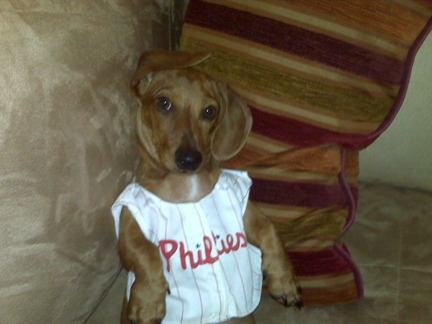
Description:
The Philadelphia Phillies are in the World Series, and their gonna go all the way!! My little man shows his philadelphia spirit in this picture.
Age :
3 months
Name:
Jenny
Color:
red
Description:
She has runny eyes , Working on the cause with the vet , She loves to sleep or your chest over your heart, And teething as you can see
Age :
7 months
Name:
Simone & Jelly-Bean
Color:
Black, Brown and Tan
Description:
Aren't their colours unusual?
Age :
9 WK's
Name:
Cody
Color:
Isabella&Tan
Description:
Age :
6 weeks
Name:
Cream ML
Color:
Cream ML
Description:
Here's a pretty puppy from
Age :
Just born
Name:
Newborn Piebald Litter
Color:
Piebalds
Description:
A litter of pretty Piebalds ra
Age :
4 months
Name:
Willow
Color:
Chocolate/tan MS
Description:
Willow is a chocolate/tan MS female miniature dachshund from
Age :
2 years old
Name:
Rainy
Color:
Blue/tan Dapple
Description:
Rainy is a beautiful Blue/tan Dapple MS female miniature dachshund from one of my own breedings.
Age :
6 weeks
Name:
Pretty Boy
Color:
Chocolate/tan Piebald MS
Description:
This is a handsome Chocolate/tan Piebald MS mini dachshund male.
Age :
9 weeks
Name:
Cutie
Color:
Red
Description:
Age :
9 weeks
Name:
Seven
Color:
Red
Description:
Age :
1.6
Name:
Sir Woodrow
Color:
piebald
Description:
My Best buddy,he's funny he love to make me laugh, he's a longhair dachshund piebald,to me the best dog in the world
Age :
5 weeks
Name:
Shadow
Color:
white/red
Description:
Shadow is a male pie bald dauple miniture. His markings are very prominate.
Age :
5 weeks
Name:
Harmony
Color:
white/cream
Description:
Harmony is a female pie-bald daupple with facial and body markings.
Age :
5 weeks
Name:
Sonic
Color:
white/cream
Description:
Sonic is a pie-bald dapple miniture. He has beige markingings in the face area and some spotting on his back. He is adorable.
Age :
2 years old
Name:
Zippo
Color:
black&tan
Description:
Zip is a beautiful AKC Miniature B&T Dachshund.
Age :
3 years old
Name:
louie
Color:
black
Description:
him and the bird r best friends
Age :
6
Name:
Daisy
Color:
Orange
Description:
cool dog
Age :
1
Name:
coco
Color:
red
Description:
Loving, wounderful!
Age :
4 months
Name:
Gizmo
Color:
black, brown
Description:
cute, aint it... ;-)
Age :
3 Months
Name:
Olivia-Rose
Color:
Shaded Red
Description:
Our mini Daxie catching some rays...
Age :
6 Months
Name:
Olivia-Rose
Color:
Shaded Red
Description:
Champion in Training
Age :
1
Name:
Jimmy
Color:
black & tan dapple
Description:
so adventurous!
Age :
4
Name:
Oscar
Color:
red dapple
Description:
He loves to swim!
Age :
4
Name:
tzina
Color:
black
Description:
with litle zoro
Age :
13 months
Name:
Guillie
Color:
black brindle
Description:
Waldmeister Guillemot is the top winning minature wire haired dachshund puppy shown in the UK this year.